Thursday, October 15, 2009

Blog Action Day - Concern for Climate Change

Living in the States sometimes is a different facet altogether especially if one has lived around traffic jams and honking sounds and seen dark evening clouds filled with gaseous pollution, indeed a reflection of a life amid excessive urbanization. I remember as a student how concerned I was of mankind’s notorious affects on Mother Nature through chemical and industrial pollution, fossil fuel emissions and deforestation for commercialization. Today as a mother my concerns for climate change are deeper and double. I would never want my toddler to learn that tall buildings or racing cars or even frozen meals are much better than simply sowing a seed, planting trees or preserving the life around. Our children are our future and to rear them in a safe environment we need to change our present so that these kids enjoy a greener globe. This concern is my voice for climate change in the 21st century.

In my view times ahead are going to be tougher and our acclimatization to change today with a new state of mind can help us through transitions. Automation and technology have already influenced us over the past few years by making our lives easier through push button services and plastic money. So far so good but somehow the thought of a convenient lifestyle also conveys a perceived message. An easy way of life perhaps has incited mankind to crucify nature day in and day out. Blog action day on Climate Change conveys the need to actualize on our ideas now and capitalize on the resources available today to us in order to save our souls from environmental threats in the near future.

The issue of global warming as we all know is diverse ranging from food to travel to business and politics, as each has been a contributor in its own specific way over the past decades. Talking about the role of business and industry seems significant to me as any organization is bounded by corporate social responsibility, of which continued efforts to minimizing future risks to a healthy environment are utmost important. Toyota’s hybrid cars indeed are a good illustration here. It shows the organization’s strategic initiatives to green living. Not only is it motivating us to be climate friendly but also reducing our dependency on our Middle East counterparts.

Climate change therefore is just not an ethical issue anymore but a forefront corporate initiative that shows an organization’s strategic leadership and vision. To name a few Statoil (Oil & Natural gas), Whole Foods Market (Retail), MTR Corp (transportation), Unilever (Household goods), and Sharp (Electronics) are pioneers who have successfully adapted their business mission to a green world. Their green initiatives are a benchmark for many budding businesses, proving that climate change today is more than just a policy framework or state regulation but a business intervention as well. The road to climate change however still has binding concerns ahead with industries such as Marine, hydropower, tourism and insurance as most vulnerable to change. This perhaps is the root to a burgeoning question that faces most business around the globe, ‘mitigate climate risks vs. adapting to climate change’.

In my view a better strategy perhaps would be to minimize risks through adaptation rather than spend million dollars on research and development to mitigate climate risks. Any change suggests creativity and orientation to future. More importantly it encourages us to adopt and adapt, just like we did when buying hybrid cars or saying no to plastic bags or saving cans for recycling. Taking a clue from change as a mighty word here, I am inspired to adapt. In my view the adaptation strategy shall enhance business flexibility. It however shall be a long-term investment with a longer pay back period than any man made portfolio. It still seems better than spending our savings reserved for our future generations on mitigating risks that may or may not yield desired and timely results. In my view, any corporate decision, as also decisions in our daily life have an opportunity cost to it. Businesses in the US, as also around the globe need to weigh this opportunity cost to come to terms with Nature.

With some thoughts shared for a cause that needs action now, I feel pressured for our future generations. The responsibility of climate change is ours as we have contributed a lot in different ways to the nature. I hope that our global village sustains its green wealth so that our little one’s can swing in nature’s arm and bud into its bountiful charm. Climate change should therefore be of significance for a global leader like United States so that its pledge today is a vow for the rest of the world tomorrow.

Copyright (c) 2009 - present Dharbarkha.blogspot
Photo Courtesy: © 2009 Jupiterimages

Monday, October 5, 2009

Lijjat’s Lineage of Change

My story is inspired by an educational tour during my school years. The story dates back to 1959 when education and empowerment was a voice for the few. Men were bread earners while women stayed indoors. That year, one-day the dawn broke over a small town in Gujarat (western India) with colors of rainbow bright and clear. The day marked history of empowerment through sisterhood that started a lineage of change, a livelihood for many today. Lijjat, as commonly known was conceived by a group of 7 women who came together under a single roof to make and sell poppadoms (http://www.lijjat.com). A home venture then, Lijjat is a successful business model today that has turnaround the lives of many illiterate and poor women. Lijjat accounts for an all women establishment of 46000 across 62 branches in towns, cities and rural regions in India today.

As I unfold this story further, I remember the slums of Mumbai where life is a struggle day in and day out. Making ends meet is a challenge for most women. Lijjat has offered some of these women a regular income, thus evolving them from a state of needs to desires. Most Lijjat women today are their family’s bread earners and have been successful in providing education to children with better amenities and an improved quality of life. Lijjat’s distinctive feature of sisterhood is not based on employment but a lifetime sister membership where each woman is related to other irrespective of her religion or state boundary. A unit that started with 7 has liberated thousands of women from their shells over past decades. Mothers, wives and daughters work in unison for Lijjat and have proved to be an asset. They have collectively redefined women empowerment and contributed to India’s cottage industries development.

Lijjat is a savior for many poor women. It has made them independent, as also taught them to be interdependent. Some young Lijjat sisters today are educated and uphold managerial roles. Lijjat as yesterday’s concept is a belief today and a hope tomorrow. It has proved that poverty or illiteracy may be bottlenecks but it is our will to succeed that deems challenges as opportunities and not adversities. It has proved that women may be born with half the sky but their endurance is their continuing effort to evolve and exist. This endurance is their strength and capacity to embrace newer roles and to multitask, a lesson that everyone can be enterprising provided we open up to change.

Lijjat operates under an open management system where all sister members share equal rights. It embodies the values of mutual respect and bonding, a conviction that actually birthed Lijjat. Truly and deeply, Lijjat has contributed to the cause of enabling women to a free and fair expression. As I end now, I am unwrapping Lijjat snack bought from an Indian store while sitting thousand of miles away from India.


My write up Lijjat’s Lineage of Change that was posted in the New York Times Half the sky contest.
Copyright (c) 2009-present Dharbarkha.blogspot

Photo Courtesy: BBC

Tuesday, September 29, 2009

She is a woman : A poem by Barkha Dhar


“In this sacred heart is the home of burnt desires
a garden of fake flowers
a life glazed with pain
so immense and so drained
Every knock on this heart awaits a change
to see my world shine forever and ever again

She is voice of a mother, a wife, she is a lover and so much more
for she is a woman before her garb of roles
The truth however unfolds the fact
she is living in a world so dogmatic and whack
Change for her is so opaque, so unfair and so fake
She is independent and manifested yet is abandoned and evicted
for she is a woman forgotten and inflicted

Much has been done over the years
to stop oppression to wipe her tears
She still has a toll tearing her soul
for she is a woman so beautiful and bold
In this ravage she is searching for life
a light of her own to fight for her right

Education has given emancipation for she is so full of anticipation
She has a heart so tender to care
with a womb that has the power to bear
She still has to tackle society’s shackles
for she is a woman fighting her battles

She is a bird closed and caged, for she is a woman so full of rage
She is assaulted, set ablaze for she is a women abducted as bait
She has a palette with colors so pale
for her atrocities narrate her tale

She is singing a song take me along just take me along
to a place of love where I belong
A place where my gender is no more slender
A place where my peace is not haunted on streets
A place where life is so calm so I could live in no harm

She is a mother, she is a wife,for she is a woman
singing the song of her life
She has a heart that waits for change
to see her world shine forever and ever again”.
- By Barkha Dhar

Copyright (c) 2009-2010 Dharbarkha.blogspot
Photo Courtsey: Dryicons.com

Wednesday, September 16, 2009

Humility Gives Hope - Barkha Dhar - Hindustan Times


My latest article Humility Gives Hope has been published in the Inner Voice section of The Hindustan Times, India's leading Newspaper.
Alternative link to the article Humility Gives Hope has been published in the The Hindustan Times Inner Voice Blog
Copyright (c) 2009 - present Dharbarkha.blogspot

Tuesday, September 15, 2009

Empathy is deeper than Sympathy


The huge tree with shriveled branches outside my window once cradled youth. As giant as it is even today, it has a past of dry winds and heat waves. Similar is the cue of people who have suffered crisis and distress. Pain and sufferings are amputation of emotions and a series of soul killings. Such aftermath leaves life at ground zero especially if the cause is a social stigma. Atrocities on women have been timeless. From ‘Devdasi’ (a form of celibacy practiced in ancient south India) that induced the culture of Institutionalized prostitution in India to sexual enrages in the political prisons of Iran to human trafficking in East Asia & Pacific to mass rapes in Congo, all narrate death trails. These women while suffering oppression due to illiteracy, poverty or political exile live with clogged emotions that brutalizes their life as each day passes by, unlike their physical injuries that have been long overcome. Their trauma, an incident when their shrine, the human body was sabotaged mercilessly with masculine force or when they were taught to gift themselves relentlessly as slaves to men owing to religious and social nuances is an illustration of their bleeding souls. The question then arises, can these emotions be repaired?

We all know pain is somber and needs an expression over and above compassion. To rise in pain is a state of mind and not just a verse of heart. Evoking sympathy, an act of sharing somebody’s feeling, something that we may or may not have ever experienced, is simply filling and not fulfilling. Sympathy may also be momentary and sometimes just not enough especially with victims of child abuse, and sexual traumas. It may even lessen the spirit of these victims to let go their emotions and may make them sheepish in the fight against their emotional exile. How would one sympathize with the six-year-old girl in the village of Kangra in Himachal Pradesh, India who experienced a sexual violation from her ten-year-old friend? The societal standards would try to console the girl, yet unbearably force her to live a life in shame. Isn’t then this a shame on the act of sympathy? I wonder how sympathy sometimes seems similar to the idea of implementing change in organizations, ‘open doors but closed minds’.

A holocaust of emotions, shivering and shaking prolongs for empathy. Evoking empathy is connecting to our true self through a virtual bridge of thoughts, feelings and actions, an expression that deeply helps us understand other’s intensity. It is sitting in one part of the world and crying like a child while listening to the woes of women experiencing shattered emotions in the other part of the world. Empathy may have several meanings but to me it is my inner voice to re-purpose life.

An empathetic person such as Nicholas Kristoff of New York Times doesn’t just cover stories of surreal apathy of women across the globe but besieges himself in the cause of preserving such existence. He shows empathy by rescuing two innocent girls from a brothel in Cambodia and frees them like a bird inside a cage. Similarly, when Azar Ale Kanan(http://www.youtube.com/watch?v=GC9fi6d6O7c), an Iranian political exile victim breaks her thoughtful silence and decides to fore go her absolution to let millions know of harsh realities in Iranian prisons, she shares empathy for similar women longing for freedom. Empathy in a way is divine. It tells you that supreme never created life so that emotions could be toyed. It unfolds multiple emotions to the truth that humanity in its diversity is an asset.

Time transitions each day, unfortunately our attitudes don’t. If empathy was in stride, women facing crisis across the continent wouldn’t hide in pain without complain. Moreover, parents or counterparts wouldn’t martyr for their daughters or wives or even tag them unholy as in some countries of the world. Every human has the right to survive in broad daylight and empathy is sharing such light. Being empathetic is to let our natural self evolve to explore our latent emotions to attune to our conscience. Empathy is an emotional bonding that can help humanity transition from darkness to daylight, a cause as significant as globalization. Not to end here and yet to begin, empathy is sabbatical, a time off for a heartfelt listening to several victimized women for bringing them from unrest to rest.

Copyright (c) 2009 - present Dharbarkha.blogspot
Photo Courtesy: photobucket.com

Saturday, September 12, 2009

Eunice Kennedy Shriver: The women who saw Ability in Disability | Intent.com


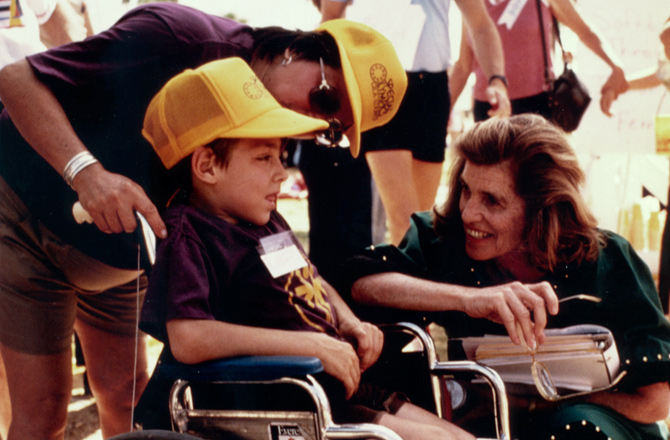
As I sit down to write I remember a legacy that is rhetorical of boundless love, compassion and unsaid companionship. Fostering such inheritance that serves the cause of existence reminds us of a mother’s pretentious and unconditional nurturing of her embryo, a bequest similar to the vision of Eunice Kennedy Shriver. Her life was an illustration of emancipation for the challenged, for she was the one who saw ‘ability in disability’. She believed in what she saw and made the world see it. In her words, “You are the stars and the world is watching you. By your presence you send a message to every village, every city, every nation. A message of hope. A message of victory” (http://www.eunicekennedyshriver.org). Her groundwork of rebuilding hope and reshaping lives is a sheer strength for millions today, as also a gateway to righteousness and an entourage to empathy.
In a world where peace and tranquility are bartered for fake emotions and material convergence, Eunice Kennedy aspired to plow into the aspect of contribution to humanity through her insurmountable appreciation and love for the challenged. She was a Kennedy; unique, elite and class apart. Her purpose for life was deep and clear and so was her courage and compassion for the one’s who were disintegrated from the mainstream. The initiation of Camp Shriver was to bring back this lost world to the one’s who needed it most. 
Her advocacy for children’s health and disability led to various foundations and health care facilities, among which Special Olympics was her greatest humanitarian achievements. She took the cause international. Like the Kennedy brothers, her humility mirrored her true intent and that was to be human and respect human. Her life was an open book to her roots, a family name that dedicated itself to the cause of service and hope for the people of this nation.
 Her altruistic mission taught us that humility never thrives on intellectualism alone. It requires us to be in control of emotions and most importantly have an urge to give back to society what we got from it. Her Humility was a cognizance of her humanness and her dedication to change, to rehabilitate and restore the will to live. She gave us an unforgettable lesson that humility is a conscious choice between being served and serving others. It was Eunice Kennedy’s compassion for her sister Rosemary’s pain that she saw in each challenged child and eventually Rosemary’s happiness in the enthusiasm and felicity of such children, a cause that deeply connected her with each child. She proved that challenges are not adversities but possibilities and opportunities. Eunice shared an endearing relationship and indeed a common agenda with her younger brother.  As Senator Ted Kennedy remembered Eunice on her death, “ she understood deeply the lesson our mother and father taught us: Much is expected of those to whom much has been given”. In a similar remembrance Ted Kennedy Junior described her as a competitive women and a great sailor. She was a woman of substance who shared her spirit and installed competitiveness in millions, yes a true torchbearer. Eunice Kennedy is not alive today but her legacy shall always be.

Eunice Kennedy Shriver: The women who saw Ability in Disability | Intent.com

Shared via AddThis

Photo Courtesy: Special Olympics

Tuesday, September 8, 2009

Severity: A principle of Law or Life ?


The sermon of Shariah, the law in Malaysian land is the guiding principle to a Muslim woman’s posture of life. However time is reminiscent of the benumbing account of the ‘stoning of Soraya M’ in Shariah Iran. The incident speaks bizarre tales of dissonance today with such law. It further narrates the apathy of humanity in the garb of a woman, as also a mortuary of the laws of life. Every religion is sacred and serene as each propagates ‘living to be loved’. These preaching may seem little distinctive to us but they are unique for the supreme. As Swami Vivekananda once said, “ It’s the way you feel; feel like Christ and you will be a Christ; feel like Buddha and you will be a Buddha”. Similarly the holy Quran prescribes the Islamic way of life and explains its objectivity of educating minds and changing human attitude towards life. According to me, religion across sects is like a flower that unfolds each petal to devotional and ritual observances with faith and morality deep rooted. Kartika Sari Devi’s incident is an eye opener to such religion. This incident not only is a tussle between politics and religion but a choice between law and life. The part time Malaysian model and a mother of two may have committed a sin and trespass her religious boundaries but how appropriate is a decision to cane someone even though with moderation?


Using a rattan stick to make a woman aware of her mistake in 21st century world somehow cognates to Soraya. M’s appalling death incident by throwing stones while chanting “God is great” in 1980’s in rural Iran. If faith is the foundation of religion and God is our guide then how similar is religion and a rigid law? The situation on her so-called punishment opens doors to the cause of humanity. Apparently it was Kartika’s decision in her complete senses to go beyond the social norms and commit such mistake. Canning punishment, an act that none would inflict on children for their misconduct, is dishonoring the dictates of conscience and a probable disgrace to humanity. In my view the principles of life are preface to a law. Any law or religious verdict needs to be a dispassionate critic at least in a modern society where multiculturalism is the heart of change. It seems Kartika Sari may have got carried away in an emotional spontaneity under a multicultural influence while unleashing her religious coating. What Kartika today needs is not a cane but a resolution to recuperate her faith. From the verses of Quran, “the Allah is the most gracious and the most merciful and the owner of the day of recompense”. Kartika’s recompense is to attune to her inner voice, understand the effect of her doings as confirmed with the preaching of her sacred religion just similar to a law that confirms to humanity. Kartika’s canning is not the end to a cause. It may excite more people to commit such mistake, bear the cane and move forward. She needs to embrace that religion has the power to forgive and forget as it exists for the cause of humanity and not against it. Any law needs to abide by such guiding principle. Analogous to the verses of Quran, “all human beings must be treated with honor and respect without any distinction, such is our faith that sees God as an inner light steering us through the darkness. Our God may have thousand names but he resides in all so have mercy on severity.

Read the Article at HuffingtonPost
Copyright (c) 2009 - present Dharbarkha.blogspot
Photo Courtesy: © 2009 Jupiterimages