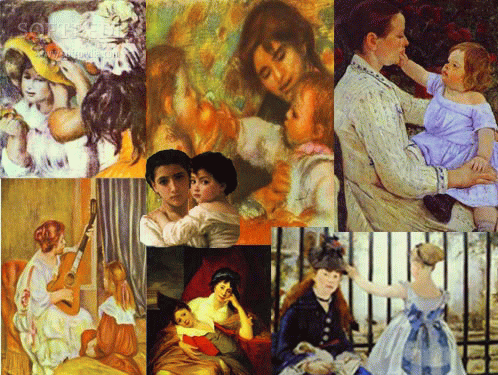
Historically, men have been known to act as muzzles that have prevented women’s liberation and empowerment from happening in full swing. Men have also been adduced as self-proclaimed czars who have taken away women’s privilege as their appanage. In doing so, men have often been read and remarked as mischievous, perverse, and wicked in their willful means. But not all men are same just as all women are different. Reading a man’s motives may sometimes appear tough while at other times his feelings may be as playful as a tot who sprouts in love. For many of us women, the men in our life have been our life’s axis and we have revolved around them in different garbs. They have been the charmers’ on a date night, or have been our lovers, partners, and confidants. They have also been our greatest pals who have taken a charade of impositions on themselves to save us from the grind. But at other times they have also been our grave abusers. In both ‘either/or’ situations of life, men have shown their zing triggered by their testosterone levels. As our loved ones with a midas touch, they have soaked away our troubles and pain in their steadfastness. At other times, however, they have left us stranded and harrowing for help on life’s empty shores. But most of the time they have been just men, adamant or ardent who love to pursue their true blue nature in anything they embrace with their masculine verve. Yes, they are men, a human species who are judged on their virility and gauged for the many roles they play in our lives as fathers, brothers, husbands, or sons.
Right at birth their social conditioning is different than us women. They are gifted with more freedom and a greater degree of choice. They are taught to be courageous and impudent with occasional reliance on expressing their inner emotions. Perhaps it is one reason that men don’t cry much and they also don’t hug always, but when they do they suffice it with sheer wholeness. Their strength and warmth is also their brute force that keeps us women feeling shielded against the unsought swords, lances, and arrows. Not only this, but man’s cognition and their wisdom is the kingdom of their competence and capability that fills up all the shallow holes of our life though sometimes men can go berserk too. This is when they get tangled up in the fine threads of life, such as when draggled in an extra-marital affair, or when dogged by their dear mother if they support their better half, or when they get caught up between a pertinacious wife and a nagging and provoking daughter. Well those are some of the terrible times when our men are clasped in two worlds! For no rhyme or reason, these clasped men are split apart like pieces of a jigsaw puzzle until they use discretion and gumption to fit all the pieces together to make a clear picture. It’s the man’s foresight, maturity, and emotional stability that we women can always count on. When our beloved men use these gifted qualities in real life situations, they score over other men who don’t. Also, it is our men’s love beneath their logic and not their indiscreet acts that inspires us to look up to them. So let’s stand up in ovation for the many men in our lives who cheer us as our fathers, brothers, husbands, and sons. These men do and can make a difference in a woman’s life.
A recent news item in the Reuters (factbox: The world's most dangerous countries for women), is a tumultuous testimony of the onslaught against women that still exists in many parts of the world. It is a lamenting yet noteworthy issue that despite a sociopolitical voyage for gender equality, women’s rueful plight remains a dreary discussion. Some of the countries that rank the highest in this predicament are Afghanistan, Congo, Pakistan, India, and Somalia. The brutality against women in these countries includes illiteracy and economic discrimination, forced marriages including child marriages, sexual violence and female genital mutilation, honor killings, domestic servitude besides human trafficking. The report suggests that 1 in 11 women in Afghanistan die of childbirth, while 57% of pregnant Congolese women are anemic. Also, 87% of women in Afghanistan are illiterate, while a mere 7.5% women hold parliamentary seats in Somalia, the horn of Africa. Moreover, 40 innocent Congolese women are raped everyday, while 95% of Somalian girls and women are put through genital mutilation. Not far beyond in the race, a 1000 Pakistani girls and women face honor killings, while 50 million infant girls are missing on account of infanticide and feticide in the religiously devout India. Many women in these countries experience physical assault and battery, unfortunately as customary to rustic traditions and the predominant culture of male monarchy. The above statistics may appear antediluvian, but it is a fresh perspective on the existing, and ever exacerbating indignation against women. What may seem even more depressing is the bitter truth that majority of population in these nations is either unaware of such violent and life threatening tribulations, or perhaps is least bothered until the fire engulfs their own turf. Many times, the victims of these crimes are forced to bear abuse repeatedly and are intimated if they urge to take an action against it. Other times, victims’ emotional vulnerability becomes a vantage point to keep them in a state of denial like a sitting duck for the perpetrators. Also, the fact that some of these countries are an ongoing war zone, and lack a central government system, or are partially ruled by the militia, further extinct the possibilities for social change and investment in women empowerment. Moreover, the influence of theocratic law in some of these countries makes economic reforms preposterous. In addition, incessant absolute poverty and high levels of corruption are some other depriving factors for change. For instance, in India, where women’s economic participation and educating the girl child is on the rise, the country’s social systems appear unsuccessful in impeding female feticide. More importantly, social issues like education, women’s rights, and child marriages are rarely significant as far as political manifestation is concerned. Mostly theses issues appear like a small figurine in the electoral campaigns that often turn gray with time. So, if this is the feat of change, then we sure are in for a failure!
Women, for long have been a buffoon puppet of the media and entertainment. As a gratifying toy, women have mainly been recognized as an object of seeking pleasure by pulling their psychological and physiological strings. Women, more often have been recognized for their physicality and least for their inner beauty. The media portrayal of women today is nothing less than an active and passive eroticization that often leads to a desire for voluptuous figures and augmentations in young girls, an accession sadly not of their intellectual and emotional self, but more often of their physical self. Billboards, magazines, video games, music videos, internet and even sometimes in movies, people love to see women unclad. As a poster girl, physicality of a woman displays her audacity to bare it all in public, showing a gallantry for fame that’s not far away from shame. From a velvet image in the past, women today have been incited to arousals, real or fake, who cares? The fact of the matter is that women are being used and sometimes even violated to animate passionate emotions and media largely has been the impetus to it. What then is the consequence of such consummation? Is it dignity alone that’s at jeopardy or does it hurt conscience too? Does this portrayal influence our value systems and family integrity? Or is it giving a wrong message to a docile child next door? Most importantly, is it in any way affecting our social systems? The answers to these questions may not have one possible solution, as many would have differing perspective on this issue. The idea of this post, however, is not just to seek solutions. But to raise concern for covert and restricted opportunity structure that women exist in and for the innumerable overt ways their talents are judged.
Also, one of the many fall-outs of an inappropriate media message is abuse and sexual violence against women that inadvertently leads to annihilation of positive emotions. In the pursuit of objectification, how different is the sex trafficking trade that causes illegal physical gratification and immoral manifestation? To what extent can the brothel businesses that so graciously put an innocent girl on sale be ruled out from their glooming, yet ever growing flesh trade? Moreover, is objectification of women concoction of a stark expression that lacks subjectivity? These are few stances that need to be uncovered and emphasized as we usher into a new epoch marked by the 100th anniversary of International Women’s Day 2011. To achieve the goals of equal access for women in science & technology, education and training, and providing decent work requires United Nations to uplift women in general, including the one's trafficked and those who have suffered turmoil in trenches, so that tomorrow when we look at a woman, we can look beyond her gender and her physical appeal.
Inspiration is like the lotus that rises from the sludge and is untouched by the impurity of pond. It’s the illumination of soul that is unstirred by repugnance of life. As spur of hope, inspiration is the internal mettle that keeps us moving even if the sun is down. As an internal coach, inspiration often emboldens us at the end of the road to be resilient and change the axis of our life. Such grit is a gift beyond age and above reasoning to uncountable souls across the globe. Today I am sharing the narratives of some such souls whose life is a sketch of inspiration.
At 9, she was impeccant as a flower that sprouts with charm and chastity. Unaware of the hurl, she was betokened in; Nujood Ali was married to a man in his 30’s. Post marriage, her turmoil seemed endless with harsh beatings and repeated rapes by her elderly husband. However, Nujood had once heard that judges could grant divorces. At 10, Nujood broke away from all traditions and sneaked into a taxi to the nearest courthouse. When she encountered a judge, she declared firmly: “I want a divorce!” and the rest was history. Nujood’s courage and determination is kindling millions in their fight against child marriages. As Nujood shares, “at first, I felt ashamed about what had happened to me. But I passed through that. All I want now is to finish my education and become a lawyer." Today Nujood attends a private school in Sanaa, Yemen and aspires to board her dreams.
She lived in a village near the Nuba Mountains of Sudan. She was abducted and sold into slavery when she was just 12. Her life was bondage to physical & sexual abuse. At 18, she was sold and sent to London for life of servitude and drudgery. After years of affliction and agony, Mende Nazer finally managed to escape from the grind. Her fight for freedom is ongoing! Today, Mende Nazer is an author and human rights activist. Her early life’s tribulations have been featured in a 90 minute movie-‘I am Slave’. Mende’s current aspirations involve charitable work to empower and uplift the children and young people of her native Sudan.
In 2009, her story was published in Nicholas Kristoff’s acclaimed book ‘half the sky’. Her life was tragic. She was poor, vulnerable and was scorned in her village. She suffered repeated beatings from her unemployed husband for not bearing him a son. After days of emotional exile and physical toil, Saima Muhammad signed up with Kashf foundation, a microfinance organization that lends money to poor women to start business. Saima took a loan of mere 65$ to buy beads and cloth to start her own embroidery business. Today her business is flourishing. Saima even employed her husband and many families in her village into it. Her determination is exemplary of the inspiration to be self-reliant she provides to others like her in her native of Lahore, Pakistan.
Everyday we meet many nujoods, mendes and saimas in the subway or on the metro, at work, in our families or among friends. They may even be the common faces that we simply pass by while in our rush to exist. Each of those faces and each of us have a story to tell, have an idea to share, each of us have the propensity to effectuate our dreams. So let’s rise to the prowess inside to live a life that inspires before it expires.
Copyright (c) 2011 - present Dharbarkha.blogspot
Video Courtesy: http://www.youtube.com/user/BarkhaDhar
Marriage is an entity of benign omens and configurations made in the heaven, performed on the earth. It’s a gracious threshold to unification of two souls and of two families. As a prime religious ceremony, its zenith lies in a father’s courage to give away his piece of heart, his daughter in a poised and sacred alliance to another man as her better half. Also known as “Kanya daan” in Hindu wedding, it’s the father of the bride that offers his daughter for marriage on a promise that the groom shall perform his duties as a husband according to the vedic(religious) hymns recited during the ceremony. For a father indeed this is a moment of peak emotions as he fondly remembers the time when he cuddled his little daughter in his arms, rode her on his strong back, was swept away by her fascinating innocence, hugged her when she had a nightmare or a problem just to see that little girl leave to a different destination one day! It must take a father’s breath away to give away his child with such deep feelings and subconscious fear for his daughter’s wellbeing in her new life.
From invoking loud chants to seven divine circuits of the holy fire (as in Hinduism), marriage is an inception of blushing emotions and a moment of coy as the bride and the groom decide to walk their journey together. With being betrothed comes a great responsibility on the couple to fructify a relationship based on mutual support and love. This elemental feature is the hallmark of being wedded to conjoin and be inseparable. Also known as ‘‘exchange of Vows” or “Saptapadi’’, these are seven significant steps in Hindu rites that defines marriage as an institution based on spiritual bond between the bride and her groom. It’s here that the couple vows to each other a healthy relationship, prosperous living, righteous lifestyle, happiness, harmony and faith, creating a family together, longevity of their marital relationship, and of being true and loyal to each other in order to sustain their companionship.
If these are the sacraments we preach and practice over centuries in India then
Why does the holy fire turn into a bride’s pyre?
Why are some newly wed brides estranged, silently suppressed, emotionally harassed and in worst cases abused and burned to death?
Is the idea of marriage today companionship or a competitive sale?
Has education and urbanization taught us nothing at all?
Is being religious, devotional to god through fasting and pilgrimages taught us to suck a father’s blood through dowry if he wants to see his daughter settled and happy?
When shall we cease inequalities between daughters and daughter-in-laws that cause us to be intellectually, emotionally and religiously immobile to practice what we learn from holy prayers and scriptures?
Are those people who are ready to bargain their son today, also ready to bargain their own daughter tomorrow?
If there is a price tag on an individual, is there a bargain for bruised emotions too?
Is being educated professionally, belonging to a good family, being raised with values just not enough for a girl to be happily married?
Is it moral to ask for dowry in a smart, intelligent way and then later proclaim that ‘we didn’t ask for anything, we didn’t get any anything’?
How would it feel to lose a young, lively and beautiful daughter? How would it feel to hear her cry, sob with pain?
What would it be like to face a crisis that haunts most fathers and daughters in India?
If Dowry means “stri-dhan”(gifts given by parents to their daughter, a property of the woman, her share of her parent’s wealth) then why is she tormented and trampled for her own wealth?
Can India contain the benefits of globalization if its daughters are strangled by a social evil?
Who should be blamed for this?
......the parents of the girl, the girl herself, the in-laws or the society and our state of mind that forces us to such immoral acts through its injurious social comparisons?
These are some questions that certainly dismay parents in India and abroad as their daughters turn marriageable or are in a marital relationship. If we still wait for someone else to be a Spartan to “say no” to dowry, then who shall be the first one to break this vicious cycle?
Today it’s happening to someone else’s daughter. Tomorrow it could happen to you and your daughter.
The fingers of my hand dissimilar yet alike in their force to conjugate; leave me at ease when I join them with others to hold the light of hope. As cheer of joy, gloom of sorrow, pace of time and symphony of emotions, my fingers behold the calligraphy of my silence. Together as one, my hands share my right to truth and justice, opinion and action, respect and dignity that concoct change, spread peace and conformity to human race as single entity under diversity. My hands as the connection between fundamental thoughts and feelings synergize and energize me to us, a state of fervencies and sanguine. Together with these hands, I withhold courage and care, indulge in adventures, set free abhorrence and endorse the privileges of mankind to liberate ourselves from the epidemics of genocide and violation of Human Rights. On this date of 10th December as World Human Rights day, my hands consort with the globe to protect this realm of its moral, ethical, social and cultural village. As the torch bearers of my conscience, my hands design a bout against torture and turbulence to protect humanity and preserve the sanctity of amity in our society. With this will and pledge, I support the strength of Aung San Suu Kyi (Myanmar), Rita Mahato(Nepal), Women of Atenco(Mexico), Birtukan Mideksa(Ethiopia) and many others known and unknown as fighters of rights since the universal declaration of Human Rights in 1950. Copyright (c) 2009 - present Dharbarkha.blogspot
With all the leadership lessons of the past and present, tomorrow holds something different. Dr. Benjamin Spock, expert on parenting said, 'I really learned it all from Mothers.' Indeed our mothers have the gift of gab, a natural trait to care giving, as also mentoring. Their sensitivity to our needs and empathy to an experiential sharing leaves an indelible mark on our lives. They show traits that could be emulated by young minds. Our mothers know us well. They have the key to our self-indulgence as they have helped us evolve through stages of life. Their three-dimensional role as mother, manager and mentor signifies their leadership diversity and efficacy to care giving. Our mothers truly can be the guidepost to mentoring with style and art. The following is a selective know-how guide.
Depth
Patience with thought parity and emotional balance are good leadership signs. Patience gives depth to the flow of thoughts and helps control emotional excitement under dynamic situations. A restraint and liberty to our Mind to play with our thoughts and emotions can transform our personality and welcome change. New age leaders need to be holistic communicators. They should be aware of, as also in control of an interdependence of their thoughts and emotions in exercising leadership. A mother's balancing act is an illustration of her capacity and character to such holistic leadership. Her emotional profundity is infectious for young minds.
Deliver
A mother's good listening skills and her values of giving help imbibe togetherness and sharing as threshold to teamwork. She fosters nourishment of feelings and actions and also helps vent pent up emotions to recharge our life batteries. This switch on and switch off and learning to collectively contribute surely has a patronizing effect on organizational productivity. The sum total of such contribution, productivity and satisfaction yields greater kinship with organization and also helps increase internal customer satisfaction, undoubtedly the preface to an apt leadership role.
Crisis
Single mothers exemplify operational capabilities and scale economies as family unit heads. Their crisis intervention can be a training parameter. Learning this art of resource optimization develops desirable skills for Strategic Business Unit Leadership. It also is training to mature intellectually and emotionally in order to critically evaluate the opportunity cost of our decisions. Capitalizing on analytical and recovery intervention skills strengthens coordination while working in large organizations. All the more, a mother's transactional leadership generates understanding the parity between responsibility and authority at a young age, a lesson that aids contingency planning and develops competitiveness in us.
Role Transition
Mothers multitask by changing roles at home and office. Their transitional leadership is a training manual to skills of preparation, encounter, adjustment and stabilization in each role. Learning this trait helps build adaptability in young leaders while working in project/ technology oriented organizations. It also enhances managerial gravity and helps cope stress during transition from specialist to generalist. Moreover, it improves concurrence to change and benefits our learning curve for an added contribution to the organization value chain.
Conflicts
Mothers exhibit tact as moderators during sibling fights. Her resolution sometimes is a tough love that could be a great lesson of life. Her emotional intelligence can be inspiring as a trait to adopt for young minds while leading cross-cultural teams and dealing with expatriate issues on sensitivity to relationships and emotions. A mother's facilitation trait also shows her tact for human relations and can be a fair guide to superior-subordinate harmony as well.
Negotiation
A mother's negotiation skills with the local mart or grocers are commendable. Her art of selling ideas and price negotiation skills display a creative dent. Using logic and imagination to root out creative solutions just like our mothers do can sometimes help us sail through complexities in sales and customer relationships.
Getting Along
The time spent with mother on family picnics and entertainment or even while shopping is our bonding. This is the time when we forget all the occasional arguments or disagreements. This bonding and learning to know each other better builds the base to relationships and obviously is a seed to sustained leadership.
Feedback
Mothers' open discussions at the dinner table encouraged self-expression to bring out the best in us. She demonstrated the qualities of a servant leader. Young leaders can be trained as coaches of their teams to lead through thought innovation and change. Learning this trait helps build a sense of community within the organizational framework.
Leader-Manager
Our mothers make and manage the home. They lead with compassion and manage with intellect. Their altruism is a great leadership lesson. Generation next, the corporate pilot and leadership investment of tomorrow needs to imbibe the qualities of endurance and selflessness from mothers. These traits can be later on developed into core competencies, which shall help young minds to balance leadership and management roles in a fiercely competitive globe.
Unbelievable yet true, sometimes real life cases are an imminent guide to our corporate roles.
My story is inspired by an educational tour during my school years. The story dates back to 1959 when education and empowerment was a voice for the few. Men were bread earners while women stayed indoors. That year, one-day the dawn broke over a small town in Gujarat (western India) with colors of rainbow bright and clear. The day marked history of empowerment through sisterhood that started a lineage of change, a livelihood for many today. Lijjat, as commonly known was conceived by a group of 7 women who came together under a single roof to make and sell poppadoms (http://www.lijjat.com). A home venture then, Lijjat is a successful business model today that has turnaround the lives of many illiterate and poor women. Lijjat accounts for an all women establishment of 46000 across 62 branches in towns, cities and rural regions in India today.
As I unfold this story further, I remember the slums of Mumbai where life is a struggle day in and day out. Making ends meet is a challenge for most women. Lijjat has offered some of these women a regular income, thus evolving them from a state of needs to desires. Most Lijjat women today are their family’s bread earners and have been successful in providing education to children with better amenities and an improved quality of life. Lijjat’s distinctive feature of sisterhood is not based on employment but a lifetime sister membership where each woman is related to other irrespective of her religion or state boundary. A unit that started with 7 has liberated thousands of women from their shells over past decades. Mothers, wives and daughters work in unison for Lijjat and have proved to be an asset. They have collectively redefined women empowerment and contributed to India’s cottage industries development.
Lijjat is a savior for many poor women. It has made them independent, as also taught them to be interdependent. Some young Lijjat sisters today are educated and uphold managerial roles. Lijjat as yesterday’s concept is a belief today and a hope tomorrow. It has proved that poverty or illiteracy may be bottlenecks but it is our will to succeed that deems challenges as opportunities and not adversities. It has proved that women may be born with half the sky but their endurance is their continuing effort to evolve and exist. This endurance is their strength and capacity to embrace newer roles and to multitask, a lesson that everyone can be enterprising provided we open up to change.
Lijjat operates under an open management system where all sister members share equal rights. It embodies the values of mutual respect and bonding, a conviction that actually birthed Lijjat. Truly and deeply, Lijjat has contributed to the cause of enabling women to a free and fair expression. As I end now, I am unwrapping Lijjat snack bought from an Indian store while sitting thousand of miles away from India.
The huge tree with shriveled branches outside my window once cradled youth. As giant as it is even today, it has a past of dry winds and heat waves. Similar is the cue of people who have suffered crisis and distress. Pain and sufferings are amputation of emotions and a series of soul killings. Such aftermath leaves life at ground zero especially if the cause is a social stigma. Atrocities on women have been timeless. From ‘Devdasi’ (a form of celibacy practiced in ancient south India) that induced the culture of Institutionalized prostitution in India to sexual enrages in the political prisons of Iran to human trafficking in East Asia & Pacific to mass rapes in Congo, all narrate death trails. These women while suffering oppression due to illiteracy, poverty or political exile live with clogged emotions that brutalizes their life as each day passes by, unlike their physical injuries that have been long overcome. Their trauma, an incident when their shrine, the human body was sabotaged mercilessly with masculine force or when they were taught to gift themselves relentlessly as slaves to men owing to religious and social nuances is an illustration of their bleeding souls. The question then arises, can these emotions be repaired?
We all know pain is somber and needs an expression over and above compassion. To rise in pain is a state of mind and not just a verse of heart. Evoking sympathy, an act of sharing somebody’s feeling, something that we may or may not have ever experienced, is simply filling and not fulfilling. Sympathy may also be momentary and sometimes just not enough especially with victims of child abuse, and sexual traumas. It may even lessen the spirit of these victims to let go their emotions and may make them sheepish in the fight against their emotional exile. How would one sympathize with the six-year-old girl in the village of Kangra in Himachal Pradesh, India who experienced a sexual violation from her ten-year-old friend? The societal standards would try to console the girl, yet unbearably force her to live a life in shame. Isn’t then this a shame on the act of sympathy? I wonder how sympathy sometimes seems similar to the idea of implementing change in organizations, ‘open doors but closed minds’.
A holocaust of emotions, shivering and shaking prolongs for empathy. Evoking empathy is connecting to our true self through a virtual bridge of thoughts, feelings and actions, an expression that deeply helps us understand other’s intensity. It is sitting in one part of the world and crying like a child while listening to the woes of women experiencing shattered emotions in the other part of the world. Empathy may have several meanings but to me it is my inner voice to re-purpose life.
An empathetic person such as Nicholas Kristoff of New York Times doesn’t just cover stories of surreal apathy of women across the globe but besieges himself in the cause of preserving such existence. He shows empathy by rescuing two innocent girls from a brothel in Cambodia and frees them like a bird inside a cage. Similarly, when Azar Ale Kanan(http://www.youtube.com/watch?v=GC9fi6d6O7c), an Iranian political exile victim breaks her thoughtful silence and decides to fore go her absolution to let millions know of harsh realities in Iranian prisons, she shares empathy for similar women longing for freedom. Empathy in a way is divine. It tells you that supreme never created life so that emotions could be toyed. It unfolds multiple emotions to the truth that humanity in its diversity is an asset.
Time transitions each day, unfortunately our attitudes don’t. If empathy was in stride, women facing crisis across the continent wouldn’t hide in pain without complain. Moreover, parents or counterparts wouldn’t martyr for their daughters or wives or even tag them unholy as in some countries of the world. Every human has the right to survive in broad daylight and empathy is sharing such light. Being empathetic is to let our natural self evolve to explore our latent emotions to attune to our conscience. Empathy is an emotional bonding that can help humanity transition from darkness to daylight, a cause as significant as globalization. Not to end here and yet to begin, empathy is sabbatical, a time off for a heartfelt listening to several victimized women for bringing them from unrest to rest.
Women’s right seems like a gigantic struggle that most women face in developed, developing and under-developed nations. The issue is a walk on a tight rope, may not be as much for developed nations. However for developing and under-developed world it is a mammoth crisis. Poverty, lack of awareness and resources, social segregation and gender discrimination are some prominent parasites of change. Besides this education ranges from none to bleak. The hope for a brighter tomorrow comes with taking up such issues seriously at local and government level. The point that each man has to stand for his woman seems good but what are the chances of such change? An alternative however could be that each educated and empowered woman stands to change every other woman who feels under powered, powerless or even suppressed. In my view, any nation can succeed locally and compete globally if the ratio of contribution in the value chain ranges from men to women and women to women. Only a fraction of empowered women wouldn’t deliver much towards a nation’s competitiveness on the global map. So the principle of unity in diversity is yet again applicable, this time however with the aspect of unified composition of men and women on a diverse global scene. Read the Article at HuffingtonPost
Women’s equality and empowerment has little to do with mythology in my view. For God, all creatures are equal and one. The past, as is the present in some regions of the globe, has witnessed women handing over the reins to men folk. We women have since centuries been living for our husbands, children and families, numbering our own selves at last. We have been enhancing ourselves physically or sexually to please our mates. Our grandma’s stories were full of God and his exquisite creation- the women. However are women folk still waiting for a divine intervention in order to respond to sexual discrimination, emotional abandonment or even conservatism?. God may have been a little bias in terms of physical power distribution to men. He however balanced the act by creating an emotional powerhouse the women. Bravo God! We women have to realize that role equalities emanate through a balance of physical, mental and emotional interplay. Jesus or Allah doesn’t ride their golden chariots and stop by corporate or homes or schools or universities or even shopping malls to stop power discrimination. A woman has to be the savior of women and of all others like her in the community or tribe or social group. It is indeed afflicting to see how a mother sometimes enforces prostitution on her own daughter or in most cases how a mother in law in connivance with her son and husband sets the daughter in law a blaze. Mothers, daughters and sisters have to fight back and fight it out but not fight amongst. We have to unite to cease the suppression. Modernism may only educate and aware but a spiritual and emotional arousal has to come within. If God could help, he rather wouldn’t until we helped ourselves. He can only share his might by his grace and his shine through inner power. The rest is on us to accumulate, assimilate and actuate. Copyright (c) 2009 - present Dharbarkha.blogspot photo courtesy: listeningfromwithin.com
Envisioning dreams in a conservative society sure needs guts. The 21st century however has experienced change in its societal domain. Gender studies, women empowerment and achieving a racial equilibrium have for long looked good in the dictionary, law journals and the university curriculum. These issues have also been voiced and opinionated for years. Amidst all the loud voices, feature presentations, social and international agendas, there are questions that still remain unanswered. In spite of the changing face of urban women, rural regions and conservatism is still a parasite. It is a shallow and pedantic hole that is each day digging the grave for the idea of change. If we are living in a technologically advance and modern society where women are now considered equal to men and where independence meets interdependence, then why do women still feel emotionally abandoned? Moreover, why do still dreams shatter? why isn’t the right to expression fundamental and most importantly why isn’t freedom still free of cost?
Writing about social issues is certainly not my profession but a predisposition. As a little girl, I was taught that womanhood is a gift of god as we have an innate nature to nurture, the perseverance to serve and the power to deliver. I have faint memories of my childhood where women were compared to Goddess Shakti or Durga (The giver of power in Hindu Mythology). I wonder if mythology has anything to do with our social and emotional cravings or is it just a superficial answer to the soul. I wish mythology could mitigate our pain, then we women wouldn’t still suffocate in a split society trying to keep up with religious pressures, and minority faiths or even bear male chauvinism. Wide angle’s documentary on Angelina Duah Fares on PBS perhaps is the root to my burgeoning questions. The story of this young aspiring woman narrates the tales of refined atrocities on women even in this 21st century world.
Further to the above, hailing from a country where women have longed for social and economic independence, I truly empathize with Duah Fares. In times where the world is defined as a single global entity, it is pathetic and emotionally averse to see the plight of women in some regions of the world. Like Angelina Duah Fares there are several other unknown names or faces across the world who still are victims of constant suppression and resentment. It is just that some stories are told while, as others remain half written. This subject of equality and empowerment is indeed debatable. It is important to analyze if the women of 21st century are really empowered or rarely empowered? Well for starters, there are numerous examples of great women achievers whose talents have been realized and recognized. This facet is like a sunshine with women of substance like Michelle Obama, Oprah Winfrey, Hallee Berry, or even the most recent achievers like supreme court justice Soniya Sotomayor and Dr. Sangeeta Bhatia, a pioneer in artificial liver invention. These women have truly exemplified thought provoking change and the need to mentor young minds. Needless to say, from scratch to sassy, these women have soared high in a so-called man’s world. This however seems like a mirage when young girls like Duah fares are forced to cease their aspirations. This means that there still exists a huge nascent gap, which needs to be filled with moral dignity and humanity.
Moreover, If all women are born equal and are capable to compete, then why does physical abuse and sexual harassment still exists? Cases such as Duah Fares may give in or give away to religious verdicts, for now but not for long. It certainly seems like a stop –gap and not a full stop. To conclude, as President Obama said in his inaugural speech, “we need to get up and dust ourselves”. In my view, however, this dust needs to transcend economics and politics and touch social issues of liberty and humanity at large. We all need to dust our minds first if we really are committed to enforcing such change in its total domain including the hue and cry of the women force.
Copyright (c) 2009-Till Date Dharbarkha.blogspot Photo courtesy: Corbis Images