Showing posts with label empathy. Show all posts

Sunday, May 15, 2011

Care or Cure: International Day of Compassion


Famous ethicist John Rawls believed that in order to promote fairness and equality, coming out of the ‘veil of ignorance’ is imperative. He idealized a society where there was no social status or labeling associated to individuals and everyone could be entitled to same social rights.  Perhaps John Rawls envisioned a social model based on morality, ethicality, and virtues. His ideology seems similar to that of Dr. Patch Adams who intends to design a society based on ‘care systems’.  Dr Adams philosophy of holistic care integrates cause with compassion and is a consciousness raising effort of utmost importance in healthcare system today. Historically, health has been analogous to medicine and ‘bedside manner’ has therefore been a critical part of Doctors’ diagnosis and care relationship with their patients. However, over the years this contemporary facet of medical ethics has been slowly replaced by tyrannical pathology and health technology. Hence, the medical model with its many inventions may have reduced the pain. But it has been unable to eliminate the suffering in the absence of human feeling and compassion.  

In the United States, the efficacy of medical fraternity with its interdisciplinary team of health professionals indeed has been commendable in conquering many chronic ailments. Their toil coupled with ongoing innovations in clinical practice has led to scientific, yet sometimes impersonal approach to patient health. The ascending cost of care at the medical practitioner’s end and the out of pocket expenses at the patient’s end have perhaps made healthcare a big-ticket item, especially for the ones indigent and vulnerable. On the other hand, a culture of individualism in the society has made compassionate healthcare a remote possibility. In the midst of an existing sympathetic model of medical care, Dr Adams has conceived empathetic care with his astounding fun and play therapy. His new age healing integrates health of the individual with that of the family and community. His model of health does not believe in fixing the patient, but stabilizing their wounded emotions through love, joy, and humor. Dr Adams creative and famous care through joy of clowning helps restore and rehabilitate patient’s health with difference.  His benevolent intervention and humanitarian approach to the practice of medicine is a much needed component in the healthcare system today. Imagine if compassion would have been the cornerstone of healthcare, we would not have been indulging in the business of antidepressants! Or relying too much and too often on sedatives and tranquilizers leading to prescription drug abuse. Moreover, had compassionate care and not just ‘cure’ been one of the precepts of healthcare, health insurance would not have been a booming business in the United States.  

Dr Adams healthcare model seems applicable in severe trauma cases, such as war victims, war veterans, and children besides patients in institutionalized care and hospice. By sharing charismatic and colorful touch, Dr Adams and his team express the ability to uplift depressed emotions and infuse positive energies among those dejected and disconnected from the mainstream. Such phenomenon certainly is deeper than the acumen of medical science. Also, Dr Adams’ radical ideas can be elemental in bringing progressive change in our lives, community health, and society at large. Encouraging such altruistic initiatives and learning from them can be helpful in uncovering a benign emotion named compassion that each of us is blessed with.
Gesundheit! (wishing good health to all)   

Copyright (c) 2010 - present Dharbarkha.blogspot
Photo Courtesy:  elblogalternativo

Thursday, February 25, 2010

Love Inspires Us

Nature’s inhabitance of life through nesting and incubation is a unique example of love. Timeless and boundless, love is fulfillment in cheer and joy, charm and embrace. As a sanctum within, love unites us in benevolence, togetherness, yearning and desire. It’s the omnipotence of god and a divine endowment to humanity to value existence and appreciate the abundance of positive emotions inside. A synergy created through affection and compassion, inspiration and imagination, acceptance and forgiveness, love is unconditional and unbiased. Love also is consciousness where humility, sincerity and truth in thoughts, words and actions help sustain character, wisdom and intellect to achieve life’s goals and mission.

Love is an identity not by one’s professional degrees, awards, material gains, creed or caste but by a vent of genuine emotions though heart. Such care of sentiments brings excitement in life, heals past wounds, fosters strength to withstand crisis, empowers mind with determination and confidence and helps cope with vehemence and stress in emotions and relations. All the more, love is an exquisite service to self before service to others. It unfolds us to reverence for god and his creations by releasing us from negativities like anger, pride, jealously, fear and disgust. Such is love’s beatitude that evolves us to a higher state where positive emotions consecrate a humanitarian cause. 

As a transformational tool, love internalizes success through self-talk, focus on personal competencies and maintaining passion for life. A desire to connect with people and their feelings is the invigoration of love, known as empathy. Charting our life through love can even turn mammoth problems into magnificent opportunities for change. By sharing love, we expand the meaning of our life and contract selfishness that distracts us from our internal vigor. Capitalizing on love as core strength builds emotional profundity and aids self-introspection on a scale of social affection. Poetry of Shakespeare, inspirational quotes of Mahatma Gandhi, spiritual discourses of Dalai Lama, are all conquerors of love in common man’s heart. 

Manifestation of love can also lessen bigotry, superstitions, control our material cling and over ambition amid present times of fatal and excessive monetization, power and politics, professional excellence and outplay, personal and faith based rivalries. Epitomizing love both internally and externally can revitalize relationships in families and neighborhood, within communities and nations, among religions and cultures and between all ages. Love can also foment self realization when we draw its explicit energy from the bounties of nature. Spending time in silence, assessing our feelings periodically, playing with pets and children, participating in performing arts, tuning back to old hobbies, taking a day out with loved ones are  some ways we can rejuvenate love. As Morrie Schwartz once said, ‘The most important thing in life is to learn how to give out love, and to let it come in’.

Copyright (c) 2009 - present Dharbarkha.blogspot
Photo Courtesy:  flickr.com

Thursday, January 28, 2010

Compassion Is An Ace Virtue

Compassion is like a cathedral in our heart that incites us to serve the destitute. When we internalize this feeling as the voice of our soul, it bedazzles us with the radiance of an inner shrine. Often, words that emanate from our soul are the wisdom of our conscientious state and show us a unique light that exists in all of us. This illumination within is the grace that we can feel when we touch others lives through a compassionate heart and an open mind. As a synagogue inside, compassion is a novel gesture that connects affection and inspiration to pain and suffering in a healing relationship.

The magnificence of compassion is a push that we feel by sharing its benevolent power with the ones in great need. As the lyrical beats of our heart, compassion is a song that God gifted us to listen to other’s call of anxiety and turmoil, violence and abuse. Uncovering this abundant empathy inside to uplift the oppressed and unfortunate, is a fulfillment beyond comparison. Such rehabilitative force inside us can repair wounded emotions, help restore positive energy in others and can sometimes be a phenomenon deeper than the acumen of medical science.

Compassion is also a stimulant virtue that helps us honor the dignity in human relationships, irrespective of one’s material status. As fortitude of a visionary mind and strength of character, compassion is the route to righteousness. Preserving the sanctity in humanity through kind actions and genuine concern for the sick, poor, battered and homeless conserves positivity in us and also promotes social conscience. Most importantly, as a cornerstone of faith, compassion trespasses creed to create uniformity in our feelings for others and unites us in motley with our global brothers and sisters.

Mother Teresa was one such humanitarian who left us with the legacy of her compassionate mission. Her work for lepers, abandoned women and children is instrumental in the history of charity and social change in India and world over. Born as an Albanian with a heart that was truly Indian, Mother Teresa took compassion to a global scale. As an apostle of charity, she served and saved many vulnerable lives in India and throughout Asia, Africa, Latin America, North America, Poland and Australia. Had she restricted her altruistic mission to her native in Albania, this world would have been deprived of a compassionate mother. On her death, Mother Teresa laid beatified in a glass coffin with her serene white face and a life similar to a sage. As a holy icon, she taught us a chaste lesson that compassion is not an end but the means to an allusive beginning.

Copyright (c) 2009 - present Dharbarkha.blogspot

Tuesday, September 15, 2009

Empathy is deeper than Sympathy


The huge tree with shriveled branches outside my window once cradled youth. As giant as it is even today, it has a past of dry winds and heat waves. Similar is the cue of people who have suffered crisis and distress. Pain and sufferings are amputation of emotions and a series of soul killings. Such aftermath leaves life at ground zero especially if the cause is a social stigma. Atrocities on women have been timeless. From ‘Devdasi’ (a form of celibacy practiced in ancient south India) that induced the culture of Institutionalized prostitution in India to sexual enrages in the political prisons of Iran to human trafficking in East Asia & Pacific to mass rapes in Congo, all narrate death trails. These women while suffering oppression due to illiteracy, poverty or political exile live with clogged emotions that brutalizes their life as each day passes by, unlike their physical injuries that have been long overcome. Their trauma, an incident when their shrine, the human body was sabotaged mercilessly with masculine force or when they were taught to gift themselves relentlessly as slaves to men owing to religious and social nuances is an illustration of their bleeding souls. The question then arises, can these emotions be repaired?

We all know pain is somber and needs an expression over and above compassion. To rise in pain is a state of mind and not just a verse of heart. Evoking sympathy, an act of sharing somebody’s feeling, something that we may or may not have ever experienced, is simply filling and not fulfilling. Sympathy may also be momentary and sometimes just not enough especially with victims of child abuse, and sexual traumas. It may even lessen the spirit of these victims to let go their emotions and may make them sheepish in the fight against their emotional exile. How would one sympathize with the six-year-old girl in the village of Kangra in Himachal Pradesh, India who experienced a sexual violation from her ten-year-old friend? The societal standards would try to console the girl, yet unbearably force her to live a life in shame. Isn’t then this a shame on the act of sympathy? I wonder how sympathy sometimes seems similar to the idea of implementing change in organizations, ‘open doors but closed minds’.

A holocaust of emotions, shivering and shaking prolongs for empathy. Evoking empathy is connecting to our true self through a virtual bridge of thoughts, feelings and actions, an expression that deeply helps us understand other’s intensity. It is sitting in one part of the world and crying like a child while listening to the woes of women experiencing shattered emotions in the other part of the world. Empathy may have several meanings but to me it is my inner voice to re-purpose life.

An empathetic person such as Nicholas Kristoff of New York Times doesn’t just cover stories of surreal apathy of women across the globe but besieges himself in the cause of preserving such existence. He shows empathy by rescuing two innocent girls from a brothel in Cambodia and frees them like a bird inside a cage. Similarly, when Azar Ale Kanan(http://www.youtube.com/watch?v=GC9fi6d6O7c), an Iranian political exile victim breaks her thoughtful silence and decides to fore go her absolution to let millions know of harsh realities in Iranian prisons, she shares empathy for similar women longing for freedom. Empathy in a way is divine. It tells you that supreme never created life so that emotions could be toyed. It unfolds multiple emotions to the truth that humanity in its diversity is an asset.

Time transitions each day, unfortunately our attitudes don’t. If empathy was in stride, women facing crisis across the continent wouldn’t hide in pain without complain. Moreover, parents or counterparts wouldn’t martyr for their daughters or wives or even tag them unholy as in some countries of the world. Every human has the right to survive in broad daylight and empathy is sharing such light. Being empathetic is to let our natural self evolve to explore our latent emotions to attune to our conscience. Empathy is an emotional bonding that can help humanity transition from darkness to daylight, a cause as significant as globalization. Not to end here and yet to begin, empathy is sabbatical, a time off for a heartfelt listening to several victimized women for bringing them from unrest to rest.

Copyright (c) 2009 - present Dharbarkha.blogspot
Photo Courtesy: photobucket.com

Saturday, September 12, 2009

Eunice Kennedy Shriver: The women who saw Ability in Disability | Intent.com


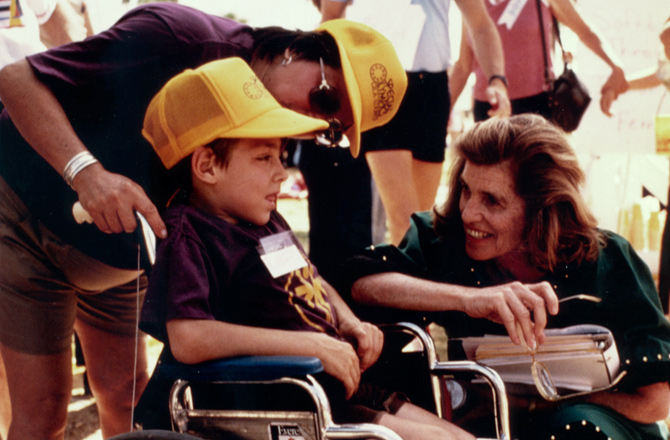
As I sit down to write I remember a legacy that is rhetorical of boundless love, compassion and unsaid companionship. Fostering such inheritance that serves the cause of existence reminds us of a mother’s pretentious and unconditional nurturing of her embryo, a bequest similar to the vision of Eunice Kennedy Shriver. Her life was an illustration of emancipation for the challenged, for she was the one who saw ‘ability in disability’. She believed in what she saw and made the world see it. In her words, “You are the stars and the world is watching you. By your presence you send a message to every village, every city, every nation. A message of hope. A message of victory” (http://www.eunicekennedyshriver.org). Her groundwork of rebuilding hope and reshaping lives is a sheer strength for millions today, as also a gateway to righteousness and an entourage to empathy.
In a world where peace and tranquility are bartered for fake emotions and material convergence, Eunice Kennedy aspired to plow into the aspect of contribution to humanity through her insurmountable appreciation and love for the challenged. She was a Kennedy; unique, elite and class apart. Her purpose for life was deep and clear and so was her courage and compassion for the one’s who were disintegrated from the mainstream. The initiation of Camp Shriver was to bring back this lost world to the one’s who needed it most. 
Her advocacy for children’s health and disability led to various foundations and health care facilities, among which Special Olympics was her greatest humanitarian achievements. She took the cause international. Like the Kennedy brothers, her humility mirrored her true intent and that was to be human and respect human. Her life was an open book to her roots, a family name that dedicated itself to the cause of service and hope for the people of this nation.
 Her altruistic mission taught us that humility never thrives on intellectualism alone. It requires us to be in control of emotions and most importantly have an urge to give back to society what we got from it. Her Humility was a cognizance of her humanness and her dedication to change, to rehabilitate and restore the will to live. She gave us an unforgettable lesson that humility is a conscious choice between being served and serving others. It was Eunice Kennedy’s compassion for her sister Rosemary’s pain that she saw in each challenged child and eventually Rosemary’s happiness in the enthusiasm and felicity of such children, a cause that deeply connected her with each child. She proved that challenges are not adversities but possibilities and opportunities. Eunice shared an endearing relationship and indeed a common agenda with her younger brother.  As Senator Ted Kennedy remembered Eunice on her death, “ she understood deeply the lesson our mother and father taught us: Much is expected of those to whom much has been given”. In a similar remembrance Ted Kennedy Junior described her as a competitive women and a great sailor. She was a woman of substance who shared her spirit and installed competitiveness in millions, yes a true torchbearer. Eunice Kennedy is not alive today but her legacy shall always be.

Eunice Kennedy Shriver: The women who saw Ability in Disability | Intent.com

Shared via AddThis

Photo Courtesy: Special Olympics