Showing posts with label Assault. Show all posts

Saturday, December 29, 2012

Desh ki 'Amanat'


जब जब नारी पे अत्याचार हुआ, हम हाथ पकड़कर  बैठे थे
कोई दर्द नही, कोई  भय नही बिन फिक्र के ऐसे लेते थे

जाने कौन घडी मै आज हमे इह्सास हुआ, कि अब चुप नही रहेगे हम
दिन प्रतिदिन ये नरसन्गार, ये बलात्कार, ये दहेज के सक्षात्कार को बदने नही देगे हम

ये आतन्क को हमने ही बडावा दिया है अब यही हमको खाने दोडा है
इस घिनोने अत्याचार ने आज आतन्क का मट्का फोदा है

ये हमारा देश है, ये हमारी बेहने और बेटीया है, ये देश हमारी माता है
इस देश की रक्षा करना हमी लोगो से आता है
कयूकी जन्तन्त्र लोगो के  लिये, लोगो से शुरु और लोगो का होता है

तो अगर ये हमारा है, तो हम इस्के कानून मे भागीदार क्यो नही है?
अगर ये कानून थीक नही तो हम ही इस्के झिम्मेदार है 
कयो नही हम इस्की प्रगती और बद्लाव के मददगार है?

आशा करता हू की इस भारत कि बेटी का सन्घर्श व्यर्थ नही जयेगा
आज
हमारे भारत मे एक इन्सान पैदा हो जयेगा


Poem by Nitin Dhar

Copyright © 2012 - Present Nitin Dhar/dharbarkha.blogspot
Photo Courtesy:  Altaf Qadri/Associated Press

Wednesday, June 22, 2011

Women, Violence and Danger


A recent news item in the Reuters (factbox: The world's most dangerous countries for women), is a tumultuous testimony of the onslaught against women that still exists in many parts of the world. It is a lamenting yet noteworthy issue that despite a sociopolitical voyage for gender equality, women’s rueful plight remains a dreary discussion. Some of the countries that rank the highest in this predicament are Afghanistan, Congo, Pakistan, India, and Somalia. The brutality against women in these countries includes illiteracy and economic discrimination, forced marriages including child marriages, sexual violence and female genital mutilation, honor killings, domestic servitude besides human trafficking. The report suggests that 1 in 11 women in Afghanistan die of childbirth, while 57% of pregnant Congolese women are anemic. Also, 87% of women in Afghanistan are illiterate, while a mere 7.5% women hold parliamentary seats in Somalia, the horn of Africa. Moreover, 40 innocent Congolese women are raped everyday, while 95% of Somalian girls and women are put through genital mutilation. Not far beyond in the race, a 1000 Pakistani girls and women face honor killings, while 50 million infant girls are missing on account of infanticide and feticide in the religiously devout India. Many women in these countries experience physical assault and battery, unfortunately as customary to rustic traditions and the predominant culture of male monarchy. The above statistics may appear antediluvian, but it is a fresh perspective on the existing, and ever exacerbating indignation against women.

What may seem even more depressing is the bitter truth that majority of population in these nations is either unaware of such violent and life threatening tribulations, or perhaps is least bothered until the fire engulfs their own turf. Many times, the victims of these crimes are forced to bear abuse repeatedly and are intimated if they urge to take an action against it. Other times, victims’ emotional vulnerability becomes a vantage point to keep them in a state of denial like a sitting duck for the perpetrators. Also, the fact that some of these countries are an ongoing war zone, and lack a central government system, or are partially ruled by the militia, further extinct the possibilities for social change and investment in women empowerment. Moreover, the influence of theocratic law in some of these countries makes economic reforms preposterous. In addition, incessant absolute poverty and high levels of corruption are some other depriving factors for change. For instance, in India, where women’s economic participation and educating the girl child is on the rise, the country’s social systems appear unsuccessful in impeding female feticide. More importantly, social issues like education, women’s rights, and child marriages are rarely significant as far as political manifestation is concerned. Mostly theses issues appear like a small figurine in the electoral campaigns that often turn gray with time. So, if this is the feat of change, then we sure are in for a failure!


Copyright (c) 2010 - present Dharbarkha.blogspot
Photo Courtesy:  Photobucket

Wednesday, June 15, 2011

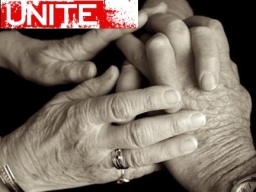
Elder Assault in Institutions: A Caveat Against Caregiving


Elder assault, even though a heinous crime, continues to be unreported and underreported in many parts of the world, including the United States. The debilitating conditions that accompany old age make elders vulnerable to an infirm and senile life that sometimes requires institutional placement. Many institutions, however, are profit centered businesses that care the least for elders’ incapacitation, their wishes and their privileges. Verbal aggression, isolation, and physical assault are some of the common forms of elder maltreatment by institutional caregivers. These offenses are rarely reported by the victim due to embarrassment and fear of the perpetrator.  Moreover, institutions, such as many nursing homes either lack trained caregivers or sometimes employ first-line staff on lower wages and without adequate professional training for cost savings.  Having a lower quality of care thus directly affects the residents and puts them at a higher risk for elder abuse. Physical assault in nursing homes, such as hitting, shoving food forcefully, administering psychotropic medications, restraints or involuntary confinement are far more deleterious for elders suffering with dementia or physical or mental disabilities. These severe impairments sometimes become a vantage point for many forms of abuse by institutional caregivers. 

Also, some institutions have rigid schedules, which more often appear like a ‘boot camp’ that elder residents need to follow against their will. Such practices quite often tend to infantilize the elderly thus harming their respect, dignity, and self-determination. Many elder residents are unaware of their rights and privileges as a nursing home resident. However, those who are aware of such benefits often restrain from taking action against malpractice. Moreover, even though the administration and management of these institutions is aware of elder abuse and misconduct, it rarely takes any action against it. Elder assault is a crime based on ageist attitude in the society and is hardly attended as a crucial issue even at the legislative level. Hence, understanding that physical frailty on account of old age is a normal and natural process of life and we all have to endure it at some point is consequential. Much responsibility also lies on family caregivers in terms of choosing the best alternatives for institutional placement though elders’ home is their safest haven. In addition, nursing home administration and management can reassess their hiring practices to appoint and retain the best talent, including rigorous and mandatory background checks of their employees, and regular service delivery and quality improvements. Finally, as bloggers, we can be spokesperson for campaigns against elder abuse and bolster the cause at local or state levels.

Copyright (c) 2010 - present Dharbarkha.blogspot
Photo Courtesy:  Bloggersunite

Monday, March 8, 2010

International Women's Day - Femininity Is Identity

“In the ambrosial chattels of my dream,
I was born in the mountains, grew up to frisk in the plains
and slide on the oceans to caress the ecstasy of the winds.

In my trance, I had the liberty to effectuate my longings
propel my intentions to veer myself of fears. But angst
I awoke to discern the vagary of my thoughts to
actual, a truth of 'as is' and the aphorism of my state.

In the tangibility of existence, I am far away from the absolute,
gripped so tight in the shackles of confinement and control
and tabooed to lift off my veil.

I am the journey of femininity and my life is a biography of
emotions. In my silence I am auctioned for beauty, in my
hustle I am trafficked for wealth and in felicity I am beguiled
of love.

As a little girl I am forbidden to emancipate, in my youth
I am in a peril of assault. As a co-worker, I cope with harassment
and as a daughter-in-law; I am asked if the gold that I brought in my
marriage is authentic or fake.

My saga is an unending face-off with time and my name
holds the aura of my gender. I am the spirit of a woman and my
femininity bears the quintessence of my identity”. - Barkha Dhar

These verses are my own, a composition dedicated to International Women’s Day, which celebrates the liberation and the elevation of global women force socially, economically and intellectually. From its inception as a revolutionary movement in 1908 to United Nations subsequent role of signing the charter in 1945 to promote gender equality, March 8Th has seen evolution of women’s identity as both conspicuous and crucial for social change. With massive about face in the plight of women through education and equal opportunity, International Women’s Day has unequivocally advocated, identified and emancipated sagacity of the female gender. As a catalyst of vicissitude, this day has induced energy and hope in each woman to surpass the dictum of gender abuse and bias. Despite mindful cognizance and global recognition of women in Academia, Business and Industry, Science and Technology, Society and Politics, Arts, Media and Entertainment, Religion and Spirituality, femininity’s   docile face nonetheless bemoans oppression.  

According to Richard Robbins, Global Problems and the Culture of Capitalism, “Women do two-thirds of the world’s work, receive 10 percent of the world’s income and own 1 percent of the means of production.” According to UNFPA, “Women currently constitute over two-thirds of the illiterate adult population worldwide. They also represent 70 per cent of the planet's poor — a reality that became more severe after the recent global economic crisis”. United Nations Development Fund for Women states, “About 22 million were expected to have lost their jobs in 2009”. Also, United Nations statistics on violence against women reveals, “globally, at least one in three women and girls is beaten or sexually abused in her lifetime. 4 million women and girls are trafficked annually and So-called "honor killings" take the lives of thousands of young women every year, mainly in North Africa, Western Asia and parts of South Asia”. With such facts and figures, claiming that most women share equal rights and are empowered is a statement that I would take with a grain of salt. These statistics speak loud of the fragile sheath that a woman is ensconced under and her potent cue for change, a transformation not just for a fraction of us but for the entity of femininity. Accentuating individuality in each woman locally and internationally is no more need of the hour but a quest of an era. 

Recognizing women’s rights as a core of a nation’s political and social agenda is a means to an allusive beginning. However gender equality and role parity is also an individual responsibility. It starts with reconnecting to self and to similar others in the community, family and society. Sharing common goals and driving developmental motives collectively are some ways we can accredit ourselves with opportunities and achievements. An understanding of the fact that there is a thin line between being empowered and feeling empowered is initiating action in the right direction. Reinventing ourselves at any age or through any experience in life inspires us to aggregate against gender violence and discrimination in order to brace a progressive demeanor. Institutionalizing such progress as our mission can help us think alike and feel alike, a trait that break evens our emotions and ambitions and a pledge that conjoins us. Reinstating this grandeur time and again and not just today can rupture any social impediments that cease the rightful apportion of freedom, fairness and justice among genders. To begin such journey, redesigning our destiny indeed shall be an expedient step.

Copyright (c) 2009-present Dharbarkha.blogspot
Photo Courtesy: dryicons.com