Thursday, December 3, 2009

Soul Search - Barkha Dhar - Hindustan Times

My latest article Soul Search has been published in the Inner Voice section of The Hindustan Times,India's leading Newspaper.
Alternative link to the article Soul Search

Copyright (c) 2009 - present Dharbarkha.blogspot

Tuesday, November 24, 2009

Kids Learn to Give Back

Walt Disney, the man behind the magical kingdoms believed that ‘our greatest natural resource is the minds of our children’ perhaps foundation to catch them young. Our children have innocent emotions that are often exhibited in their tranquil love, laughter and smiles and soulful hugs. They have tiny yet bountiful hands and bright eyes that illuminate our habitat. Children celebrate life through their propensity to compassion. Their imagination and spontaneity often expresses giving through sharing; be it snuggling with pets or feeding birds or even sharing their toys with friends. Lunchtime at school often deepens such emotion.

Encouraging this art of bestowing in our children at young age evolves a chance and not a choice to service. It helps them reach out to the under privileged and oppressed. An education to relinquish or service before self makes them independent and responsible adults worthy of capacity and character. Giving as the first lesson to philanthropy binds children in the cause for humanity. As soul’s comfort, giving promotes nobility in thoughts and actions and carves a route to mindfulness and contentment. Such lessons of life can shape our children as empathetic leaders tomorrow. It can integrate community kinship with better citizenship. As social cheerleaders, learning to give also keeps children away from pride and prejudices. It matures them to distinguish between real and fake, truth or false and needs and wants.

Our children are tomorrow’s time and their today should orient them to life’s roller coaster rides. Nurturing their giving aptitude today helps them learn that life is beautiful, as also deep. This can be learned looking at the homeless or orphans struggling to love and be loved or the starved in the slums and the ones abused and battered. This lesson of life by the sidewalk helps our children to understand the essence of balance and encourages them to share abundance to fill dearth. Such change at a nascent age would be a gratification with life tomorrow; a lesson difficult to adopt at older ages. 

 Our children as the seeds of hope for prosperity in humanity are vital links in the invisible chain that unites us all under the eternal roof. The holiday season is an occasion for all of us to knit together such emotions in our children so that enthusiasm and excitement of childhood is a right equally enjoyed by all kids. An initiative of the holidays can slowly be molded as a regular habit in children to confer at charities of their choice. Giving can nest in toddlers too by reiterating words like help, share, joy and bless. With giving and not just getting, our children shall see this world much bigger than just the love for their mommy and daddy in it.


Copyright (c) 2009 - present Dharbarkha.blogspot
Photo Courtesy:  Barkha Dhar

Saturday, November 14, 2009

A Walk Down Memory Lane


It was a chilly Saturday morning yet cars were driving into an elementary school parking lot. I saw men, women, children and even babies in their strollers ready for the countdown. It sure wasn’t a PTA meeting or a book fair or any event on the school’s calendar but obviously something so significant that people were gathered in strong numbers dressed in heavy jackets and rain boots for a cause. Perhaps this was a cue to their emotions and sentiments, as also to their mighty strength that led them stand upright in a crazy whether. As I walked towards the venue, I saw canopies with volunteers signing up people while few others offering hot coffee and refreshments. There were teenagers selling raffle tickets and a local radio station trying to jiggle up the crowd with some good music. The venue even had a kid’s zone and a man masked as a giant Red bird happily taking pictures with toddlers. This place resembled a fair where people gather for fun and good time but the event indeed was deeper than what it appeared to the naked sight. The badge that the attendees proudly wore said, ‘Be the voice of Change’ and nothing could have been a stronger advocacy for a cause than these people themselves as an intervention to change.

In this heap of energy there stood a banner that said, ‘We are on the move to end Alzheimer’s, not just an informational display but a gush of high spirits. It undoubtedly reflected Alzheimer’s Association’s perpetual combat with a human cause in order to keep hope alive and evolving. As I was moving ahead in the crowd, I got the opportunity to intermingle. I saw families and long term caregivers showing their unified courage and posterity for an Alzheimer free world. My mind suddenly experienced an inertia of thoughts to hear the somber sufferings of these care givers who underwent an emotional roller coaster while loosing their loved ones’ to an austere test of time and not just a disease. This event on the day of October 3rd marked no ordinary day in their calendars but a reminiscence of the past to convey that Alzheimer’s is not a parasite of the mind but a continued conflict of emotions.

It was undoubtedly a first hand experience for me to hear some heart-pinching cases of countenance to pain, depression and stress as these care givers remembered how mom/dad or a spouse underwent cognitive and emotional transitions after the onset of dementia. Unfortunately, Alzheimer’s is a disease commonly characterized as memory loss. It not only is a slow transformation in the patient’s memory, routine activities, physical and emotional health but also an alarm of an overwhelming remorse for their caregivers as well. This event on the day of October 3rd was an occasion when people from different walks of life came together not just to walk a mile or more on the constitutional trail but to release their fears and show a zest for life. Most families participating in the event had been care giving in the past and some were still fighting all odds to materialize resources and help for their loved ones. I could fairly sense past trembles in some of the voices and see the gloomy expressions on their faces as they tried to calm their yesterday. Most of them feared Alzheimer’s as it is genetic. Some of them even wish for a brighter tomorrow with a hope for its cure just like there is for cancer now.

In this ride through time I apparently forgot the chills from the blowing winds and the drizzle from the pouring clouds as care giver stories were wounding enough to encapsulate my mind. Hard to believe initially yet fatally true in this journey down memory lane, these people who shared their concerns on Alzheimer’s had experienced a sea of anguish. How could one imagine a daughter unfailingly trying to soothe a parent’s behavioral triggers not caring about her own vulnerability to stress? Or a wife losing her social life and companionship to a wave of demented life? My comprehension of these befalling accounts could possibly have been no way near comparison to these caregivers as ‘one who suffers knows it the most’. However as a human I have the right to share my compassion and empathize with intensity of pain named Alzheimer’s, a disease that grossly impacts somebody’s will to a dense and hearty life. I imagined had some of these loved one’s (mom/dad or spouse) been alive and active today, they would have enjoyed the joy of grand parenting or even seeking the charm of growing old with their spouse’s love.

With mixed emotions bundling up in my heart and a mind more inquisitive than ever, I spoke to some caregivers to feel in the stress that wears them out night and day while serving an Alzheimer’s patient. My discussions revealed that care giving for a disease like Alzheimer’s is an emotional toll that affects and influences the mind constantly through stress. It also drains out positive energy and sometimes may even build pent up feelings. However fortunately an event like Alzheimer’s Association’s Memory walk seemed just an appropriate outlet for calming emotions and renewing energy for caregivers to get back to action. It also facilitates expanding care-giving network between patient families and long-term care units. The event is a socialization medium and also a support group for like-minded people. Moreover Memory Walk also helps promote community kinship in a mission against a cause that seems indomitable in the present time. With an opportunity to contribute back to the society, it evolves volunteerism in young children and teenagers as they see their families’ struggle to shell out of the so-called Alzheimer’s cocoon. This event is also a tribute to the indelible loss that our community has suffered over the past years. Most importantly Memory walk conveys fellow feelings for the one’s who in this moment are lying tight fisted, immobile, unable to put their thoughts into words either on nursing home beds or as wander guards in their wheel chairs as if they were nomadic in their own community and country.


Truth remains that our mind is the habitat to our thoughts, emotions and actions. Any disease that takes away this right should not be a cause but a consequence that needs concurrence now. For Alzheimer’s Long term care or rehabilitation should be an option and not just the conclusion. This battle against Alzheimer’s is now two folds, generating hope to release patients/ families/caregivers from surmounted anxieties, as also finding a cure to keep the baby boomers away from the onset of a disintegrated life. The thought of nestling into a stage in life where one contends with their will to survive seems like an unjustified end. As I now try to close the chapter of 3rd October in my life, my mind would still toss with some unanswered questions. I shall try my best to move on, yet traces of this day and this event shall be a part of my memory for a long time.

Copyright (c) 2009 - present Dharbarkha.blogspot

Wednesday, October 28, 2009

The Moral Predicament of Incest

Ecology has a lot to offer to mankind other than diversity in the balance of nature. The dynamics and correlation of behavioral ecology to human evolution shows how ecological and social factors affect our behavior. This correlation certainly broadens ecology’s meaning towards our habitat and provides a substantial implication towards shaping our habits too. The role of life sciences in human behavior is critical to understanding variations in our cognition and emotions, our growth cycles and adaptive capabilities and more importantly our reproduction, parental care and mate acquisitions. The focus of my discussion is not ecology but an effort to understand the nature of incest through deeper eyes.

The relationship of mankind to mating behavior is ancient. This trait is as natural as life itself, as pure as emotion to love and be loved and as powerful as our mind. Sometimes it even seems as desired as a soul longing for Nirvana. However the sensitive weave of relationships and the science of genetics give a holistic meaning to mating or intimacy other than just a need. Beyond the subject of science, a copulating behavior can also be understood as being aware of our surroundings and exercising sound judgement to the interplay of our emotions under specific situations. Any act or a mode of behavior that overrules such essence of nurturing kin recognition in relationships is incest that changes the rules of the game.

It is intriguing to know how nature defines mating behavior in insects and animals. It shows incest as a characteristic not common in all species unlike the ambrosia beetles and few other species in the animal kingdom. Not many of us would be aware that an animal like tiger shows his pride through mating discriminations and kin recognition, as do some Gorillas. This mating behavior is a guide to the animal’s ego and parental instincts.

The inferences drawn from nature however can sometimes be different than a mind’s scorn reflection for incest even though literacy and advancement have leaded change. Cohabitation or incest is not an obsession or promiscuity but a hideous crime especially when involving children. It is a mental state or delusional feeling and may be even the result of a shadowed past. Incest is not only socially intimidating and a taboo in some cultures but is forbidden scientifically as well. Genetic disorders and birth defects are some major concerns for incestuous relations. However some countries do not prohibit it just as some individuals who perceive it in the light of free expression and mutual consent. It is even more impeding to see chat rooms on the Internet displaying incest as playful. Freedom and play as an excuse for an offending relationship is no way justified. Try telling this to someone’s gloomy childhood lost to abuse by a kin or to someone who is being silently seduced somewhere around the world as seconds change to minutes in a clock. For victims of such abuse life is obscure in the long haul.

Incest is not just physical but an emotional abuse that freezes time and the victim’s ability to accept new and safer relationships. It is an offense of manipulating emotions involved in a natal relationship that pose threat to the equilibrium of life. Similar to a parasite, incest affects the chastity in cognate relationships and damages the perpetrator’s and the victim’s capability to see clear in the mirror. Moreover incest is a mental state of anxieties and phobia, as also an emotional outburst of anger and hostility. It can be a personality disorder that affects the congruence in flow of thoughts, emotions and actions that guide us in the real world. Any such disassociation of thoughts and emotions from the divine norms of life and the ethos of the society can be damaging to a meaningful existence.

Incest as a behavioral disorder and a mental health concern requires therapy or psychiatric help in most cases. However any medical intervention starts with self-help. In my view our mind can be recourse to solutions just as it is to our problems. Incest seems like a situation where the mind is in complete control of the body leading to a gamut of desires that can be otherwise controlled through a normalized behavior. To control mind, other than science, one needs to see strength in the soul’s power that can amaze us through open eyes in wilderness or in city rush. As we continuously unfold to a materialistic lifestyle our desires shall double and slowly cover the face of realities in life. It is important to understand that our thoughts and emotions arise from the mind and so do abuse and other hostile crimes. Buddha, the great prophet once said, ‘It is a man's own mind, not his enemy or foe, that lures him to evil ways’. He also said, ‘Holding on to anger is like grasping a hot coal with the intent of throwing it at someone else; you are the one who gets burned’. In the light of these great words, incest is a crime that the mind inflicts on self and others. It is a coercive behavior when one wrongfully exercises power in a relationship that incarcerates one’s own life and of the one’s related through blood. A crisis such as this needs to stop now so that incest does not end up as a moral predicament of tomorrow.

Cases such as Joseph Fritzl and daughter Elisabeth (Austria), Patrick S & Sister Susan K (Germany), John and daughter Jenny Deaves (Australia) or the latest Mackenzie & father John Phillips and the Wesson family incident (USA) are more than just eye openers. Some of these cases may be rare evidences of emotional excitement for some couples while as most others unseen and unspoken simply state an emotional coma and subdued life. With incest as a hidden rage how safe is our habitat from the gravity of our own mind? Learning the lesson from ecology this time however may deeply help.


Copyright (c) 2010 - present Dharbarkha.blogspot
Photo Courtesy: Google Images

Tuesday, October 27, 2009

Mothers Can Be Mentors


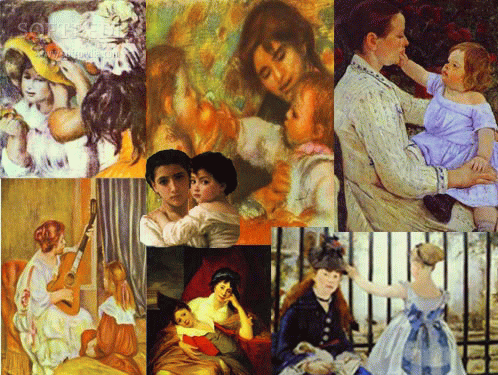
With all the leadership lessons of the past and present, tomorrow holds something different. Dr. Benjamin Spock, expert on parenting said, 'I really learned it all from Mothers.' Indeed our mothers have the gift of gab, a natural trait to care giving, as also mentoring. Their sensitivity to our needs and empathy to an experiential sharing leaves an indelible mark on our lives. They show traits that could be emulated by young minds. Our mothers know us well. They have the key to our self-indulgence as they have helped us evolve through stages of life. Their three-dimensional role as mother, manager and mentor signifies their leadership diversity and efficacy to care giving. Our mothers truly can be the guidepost to mentoring with style and art. The following is a selective know-how guide.


Depth
Patience with thought parity and emotional balance are good leadership signs. Patience gives depth to the flow of thoughts and helps control emotional excitement under dynamic situations. A restraint and liberty to our Mind to play with our thoughts and emotions can transform our personality and welcome change. New age leaders need to be holistic communicators. They should be aware of, as also in control of an interdependence of their thoughts and emotions in exercising leadership. A mother's balancing act is an illustration of her capacity and character to such holistic leadership. Her emotional profundity is infectious for young minds.

Deliver
A mother's good listening skills and her values of giving help imbibe togetherness and sharing as threshold to teamwork. She fosters nourishment of feelings and actions and also helps vent pent up emotions to recharge our life batteries. This switch on and switch off and learning to collectively contribute surely has a patronizing effect on organizational productivity. The sum total of such contribution, productivity and satisfaction yields greater kinship with organization and also helps increase internal customer satisfaction, undoubtedly the preface to an apt leadership role.

Crisis
Single mothers exemplify operational capabilities and scale economies as family unit heads. Their crisis intervention can be a training parameter. Learning this art of resource optimization develops desirable skills for Strategic Business Unit Leadership. It also is training to mature intellectually and emotionally in order to critically evaluate the opportunity cost of our decisions. Capitalizing on analytical and recovery intervention skills strengthens coordination while working in large organizations. All the more, a mother's transactional leadership generates understanding the parity between responsibility and authority at a young age, a lesson that aids contingency planning and develops competitiveness in us.

Role Transition
Mothers multitask by changing roles at home and office. Their transitional leadership is a training manual to skills of preparation, encounter, adjustment and stabilization in each role. Learning this trait helps build adaptability in young leaders while working in project/ technology oriented organizations. It also enhances managerial gravity and helps cope stress during transition from specialist to generalist. Moreover, it improves concurrence to change and benefits our learning curve for an added contribution to the organization value chain.

Conflicts
Mothers exhibit tact as moderators during sibling fights. Her resolution sometimes is a tough love that could be a great lesson of life. Her emotional intelligence can be inspiring as a trait to adopt for young minds while leading cross-cultural teams and dealing with expatriate issues on sensitivity to relationships and emotions. A mother's facilitation trait also shows her tact for human relations and can be a fair guide to superior-subordinate harmony as well.

Negotiation
A mother's negotiation skills with the local mart or grocers are commendable. Her art of selling ideas and price negotiation skills display a creative dent. Using logic and imagination to root out creative solutions just like our mothers do can sometimes help us sail through complexities in sales and customer relationships.

Getting Along
The time spent with mother on family picnics and entertainment or even while shopping is our bonding. This is the time when we forget all the occasional arguments or disagreements. This bonding and learning to know each other better builds the base to relationships and obviously is a seed to sustained leadership.

Feedback
Mothers' open discussions at the dinner table encouraged self-expression to bring out the best in us. She demonstrated the qualities of a servant leader. Young leaders can be trained as coaches of their teams to lead through thought innovation and change. Learning this trait helps build a sense of community within the organizational framework.

Leader-Manager
Our mothers make and manage the home. They lead with compassion and manage with intellect. Their altruism is a great leadership lesson. Generation next, the corporate pilot and leadership investment of tomorrow needs to imbibe the qualities of endurance and selflessness from mothers. These traits can be later on developed into core competencies, which shall help young minds to balance leadership and management roles in a fiercely competitive globe.

Unbelievable yet true, sometimes real life cases are an imminent guide to our corporate roles.

My article Mothers Can Be Mentors published on Ezinearticles .
Copyright (c) 2009 - present Dharbarkha.blogspot
Photo Courtesy: softpedia.com

Thursday, October 15, 2009

Blog Action Day - Concern for Climate Change

Living in the States sometimes is a different facet altogether especially if one has lived around traffic jams and honking sounds and seen dark evening clouds filled with gaseous pollution, indeed a reflection of a life amid excessive urbanization. I remember as a student how concerned I was of mankind’s notorious affects on Mother Nature through chemical and industrial pollution, fossil fuel emissions and deforestation for commercialization. Today as a mother my concerns for climate change are deeper and double. I would never want my toddler to learn that tall buildings or racing cars or even frozen meals are much better than simply sowing a seed, planting trees or preserving the life around. Our children are our future and to rear them in a safe environment we need to change our present so that these kids enjoy a greener globe. This concern is my voice for climate change in the 21st century.

In my view times ahead are going to be tougher and our acclimatization to change today with a new state of mind can help us through transitions. Automation and technology have already influenced us over the past few years by making our lives easier through push button services and plastic money. So far so good but somehow the thought of a convenient lifestyle also conveys a perceived message. An easy way of life perhaps has incited mankind to crucify nature day in and day out. Blog action day on Climate Change conveys the need to actualize on our ideas now and capitalize on the resources available today to us in order to save our souls from environmental threats in the near future.

The issue of global warming as we all know is diverse ranging from food to travel to business and politics, as each has been a contributor in its own specific way over the past decades. Talking about the role of business and industry seems significant to me as any organization is bounded by corporate social responsibility, of which continued efforts to minimizing future risks to a healthy environment are utmost important. Toyota’s hybrid cars indeed are a good illustration here. It shows the organization’s strategic initiatives to green living. Not only is it motivating us to be climate friendly but also reducing our dependency on our Middle East counterparts.

Climate change therefore is just not an ethical issue anymore but a forefront corporate initiative that shows an organization’s strategic leadership and vision. To name a few Statoil (Oil & Natural gas), Whole Foods Market (Retail), MTR Corp (transportation), Unilever (Household goods), and Sharp (Electronics) are pioneers who have successfully adapted their business mission to a green world. Their green initiatives are a benchmark for many budding businesses, proving that climate change today is more than just a policy framework or state regulation but a business intervention as well. The road to climate change however still has binding concerns ahead with industries such as Marine, hydropower, tourism and insurance as most vulnerable to change. This perhaps is the root to a burgeoning question that faces most business around the globe, ‘mitigate climate risks vs. adapting to climate change’.

In my view a better strategy perhaps would be to minimize risks through adaptation rather than spend million dollars on research and development to mitigate climate risks. Any change suggests creativity and orientation to future. More importantly it encourages us to adopt and adapt, just like we did when buying hybrid cars or saying no to plastic bags or saving cans for recycling. Taking a clue from change as a mighty word here, I am inspired to adapt. In my view the adaptation strategy shall enhance business flexibility. It however shall be a long-term investment with a longer pay back period than any man made portfolio. It still seems better than spending our savings reserved for our future generations on mitigating risks that may or may not yield desired and timely results. In my view, any corporate decision, as also decisions in our daily life have an opportunity cost to it. Businesses in the US, as also around the globe need to weigh this opportunity cost to come to terms with Nature.

With some thoughts shared for a cause that needs action now, I feel pressured for our future generations. The responsibility of climate change is ours as we have contributed a lot in different ways to the nature. I hope that our global village sustains its green wealth so that our little one’s can swing in nature’s arm and bud into its bountiful charm. Climate change should therefore be of significance for a global leader like United States so that its pledge today is a vow for the rest of the world tomorrow.

Copyright (c) 2009 - present Dharbarkha.blogspot
Photo Courtesy: © 2009 Jupiterimages

Monday, October 5, 2009

Lijjat’s Lineage of Change

My story is inspired by an educational tour during my school years. The story dates back to 1959 when education and empowerment was a voice for the few. Men were bread earners while women stayed indoors. That year, one-day the dawn broke over a small town in Gujarat (western India) with colors of rainbow bright and clear. The day marked history of empowerment through sisterhood that started a lineage of change, a livelihood for many today. Lijjat, as commonly known was conceived by a group of 7 women who came together under a single roof to make and sell poppadoms (http://www.lijjat.com). A home venture then, Lijjat is a successful business model today that has turnaround the lives of many illiterate and poor women. Lijjat accounts for an all women establishment of 46000 across 62 branches in towns, cities and rural regions in India today.

As I unfold this story further, I remember the slums of Mumbai where life is a struggle day in and day out. Making ends meet is a challenge for most women. Lijjat has offered some of these women a regular income, thus evolving them from a state of needs to desires. Most Lijjat women today are their family’s bread earners and have been successful in providing education to children with better amenities and an improved quality of life. Lijjat’s distinctive feature of sisterhood is not based on employment but a lifetime sister membership where each woman is related to other irrespective of her religion or state boundary. A unit that started with 7 has liberated thousands of women from their shells over past decades. Mothers, wives and daughters work in unison for Lijjat and have proved to be an asset. They have collectively redefined women empowerment and contributed to India’s cottage industries development.

Lijjat is a savior for many poor women. It has made them independent, as also taught them to be interdependent. Some young Lijjat sisters today are educated and uphold managerial roles. Lijjat as yesterday’s concept is a belief today and a hope tomorrow. It has proved that poverty or illiteracy may be bottlenecks but it is our will to succeed that deems challenges as opportunities and not adversities. It has proved that women may be born with half the sky but their endurance is their continuing effort to evolve and exist. This endurance is their strength and capacity to embrace newer roles and to multitask, a lesson that everyone can be enterprising provided we open up to change.

Lijjat operates under an open management system where all sister members share equal rights. It embodies the values of mutual respect and bonding, a conviction that actually birthed Lijjat. Truly and deeply, Lijjat has contributed to the cause of enabling women to a free and fair expression. As I end now, I am unwrapping Lijjat snack bought from an Indian store while sitting thousand of miles away from India.


My write up Lijjat’s Lineage of Change that was posted in the New York Times Half the sky contest.
Copyright (c) 2009-present Dharbarkha.blogspot

Photo Courtesy: BBC